Campus Safety Tips
Everyday tips for safer living on campus
We have a safe campus, but no community is entirely crime free.
By following a few safety tips and knowing the resources, you can reduce your risk of being affected by crime.
General safety tips
Getting around campus
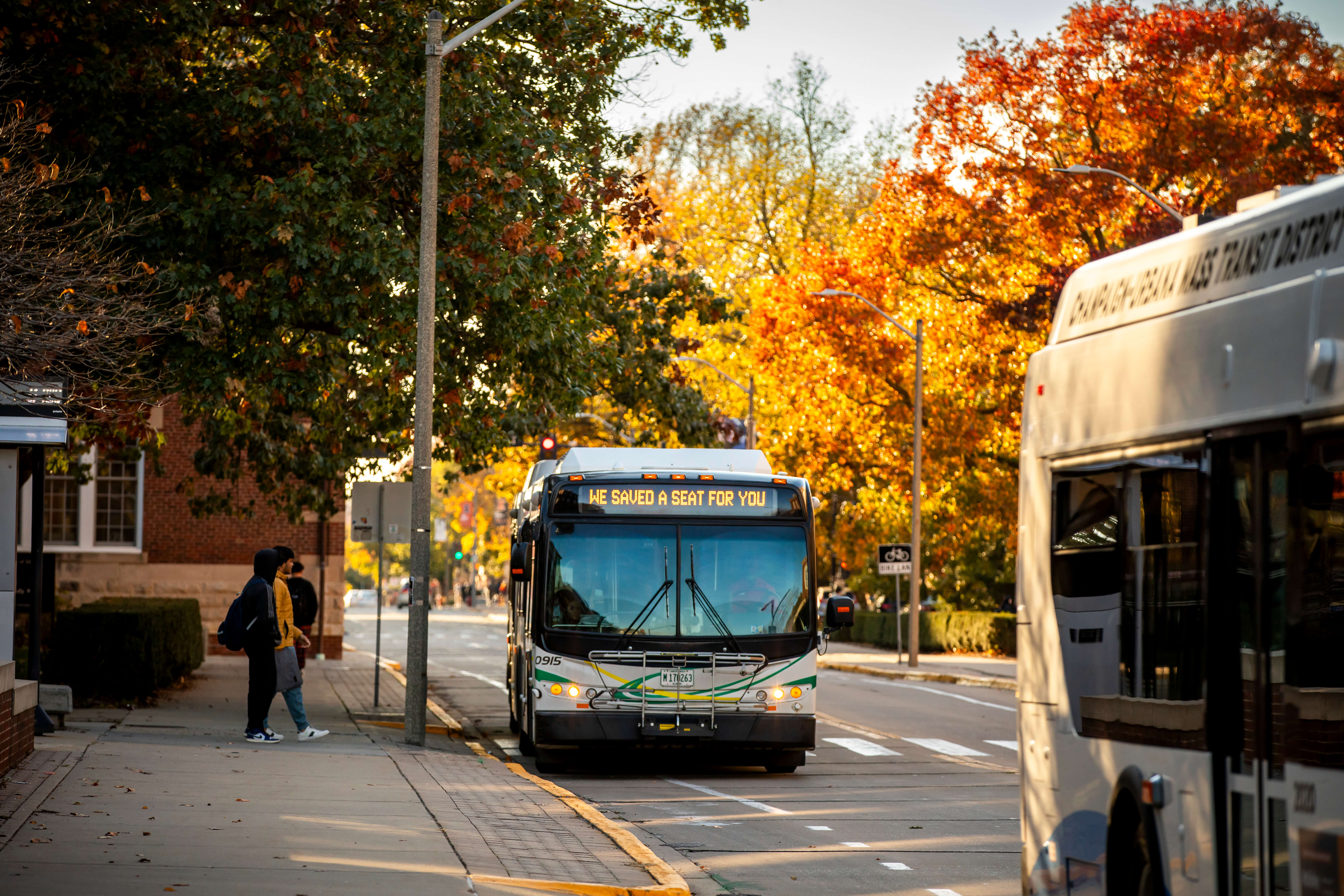
Campus traffic can get busy, especially when students are traveling to and from class. There are lots of ways to get around campus, but it’s important to observe a few safe practices.
Vehicles
You probably won’t be driving much to classes, but there is a lot of vehicular traffic on campus. All vehicles must follow the laws in the Illinois Vehicle Code. Remember to slow down in high-traffic areas, and do not drive distracted. Yield to bicyclists in the roadway — bicycles are not required to use bike lanes, nor are they required to move to the side of the road for a vehicle. Treat them like you would any other vehicle. Yield to pedestrians in the crosswalk. Pedestrians who have safely established themselves in a crosswalk have the right of way.
Bicycles
Bicyclists in the roadway are subject to all laws which apply to vehicles. Bicyclists on the sidewalk are subject to all laws that apply to pedestrians. Whether you are in the roadway or on the sidewalk, you must abide by all traffic signs and signals, like stop signs. Failing to do so is dangerous to yourself and others. Yield to pedestrians when required. Bicycle-pedestrian accidents are common on campus and may result in injury. Slow down in high-traffic areas.
Pedestrians
Pedestrians are subject to a number of laws to keep them safe. If there is a sidewalk, pedestrians must use it. Pedestrians must use crosswalks at intersections with traffic signals, and walk only when the walk signal is illuminated. Pedestrians do not automatically have the right of way before they enter a crosswalk. Vehicles do not have to stop for pedestrians who have not yet entered a crosswalk, and a pedestrian must allow enough space for a vehicle to stop safely before entering a crosswalk.
Emergency preparedness
Emergencies can happen anywhere, anytime. It is important to take a moment to prepare in case we are ever in a situation where we need to act quickly to stay safe.
Illini-Alert
Illini-Alert is used for incidents that present an imminent threat to life, health or safety to the general campus population — like fires, severe weather and if someone is trying to harm others. These messages provide emergency information and instructions for personal protective actions. Illini-Alert sends email, text and X (formerly Twitter) messages.
Everyone with a campus email address automatically receives Illini-Alert email messages, but it’s a good idea to sign up for Illini-Alert text messages so you receive prompt notification of campus emergencies.
Run, Hide, Fight
When we’re faced with any kind of emergency – like fire, severe weather or if someone is trying to hurt you – we have three options: run, hide or fight.
- Run means leaving the area quickly. It’s the best option if it’s safe to do so.
- Hide when you can’t or don’t want to run. This means taking shelter indoors from a storm or concealing yourself from someone who wants to harm others.
- Fight means to defend yourself if it comes to that.
Take a couple minutes to learn more about these options and look at the resources we’ve made available.
Preventing theft
Theft is one of the most common crimes on college campuses everywhere, and ours is no exception. Bicycles and packages are common targets for thieves, but there are a few ways you can avoid becoming a victim of theft.
Medical amnesty
By state law, the police cannot cite you for minor alcohol offenses when you call 911 to get medical assistance for yourself or another person. Additionally, the university has implemented guidelines to protect you from discipline under certain circumstances.
The goal is to encourage students to get help whenever they need it without fear of disciplinary consequences.
Learn more about these protections at go.illinois.edu/amnesty.
SafeWalks
Criminals are opportunistic and tend to target people who are walking alone late at night in secluded areas. You can reduce your risk of being targeted by walking in groups of three or more, and by using well-lit, high-traffic routes.
SafeWalks is a free safety escort service provided by trained Student Patrol officers who will walk with you when you are traveling on campus at night. Student Patrol officers are also trained in first aid and basic medical intervention, and they carry the same radios as police and other first responders, so they have a direct line of communication with emergency services. Student Patrol officers are only interested in getting you safely to your location, so it is especially important to use SafeWalks if you have consumed alcohol.
Social media safety
Keep it simple
Never post personal information, like your Social Security number, birthdate, home address, bank information or phone number, not even in private messages.
Stay private
Monitor your privacy settings, and consider sharing information only with close friends. Limit access to third party apps.
Be cautious
People may contact you for professional or romantic reasons. Often the profiles are fake, and the people behind them are scammers. Never give money and never send private photos to people you don’t know.
Scams
Phone and internet scams are common no matter where you are. Be aware of how to identify scams and what to do if you encounter one. Here are the red flags to keep in mind when you receive a call from an unknown person:
- No official will ever demand money. If a caller claims to be a police officer, immigration official, a tax agent, or any other government representative demanding money, the call is likely a scam.
- Scammers try to intimidate victims. If a caller threatens to have you arrested or deported if you hang up, the call is likely a scam.
- Scammers may demand gift cards. If a caller directs you to purchase gift cards or transfer payment in the form of virtual currency, the call is likely a scam.
- Watch out for “spoofed” numbers. Number “spoofing” makes the victim’s caller ID display a legitimate phone number even though the call is originating from somewhere entirely different. If you have doubts about a caller’s identity, you should hang up and call the listed number for that agency to speak to a representative.
Sexual extortion
Sexual extortion — commonly known as “sextortion” — is a form of sexual exploitation where an unknown individual will contact you (often on social media) and encourage you to send intimate photos or videos of yourself.
After the photo is sent, the unknown person will demand that you send them money under the threat of publicly posting the photo, or sending it to your social media contacts.
It is not recommended to pay a scammer. Offenders may return the next day for even more money.
Those who do become a target or victim of sextortion should make note of the user’s online profiles, usernames and contact information to report to police. Communication with the offender should stop immediately.
The best way to avoid falling victim to a sextortion scheme is to remain vigilant and skeptical of online acquaintances whom you have never met in person. Remember, they may not tell the truth and aim to lure victims into a false sense of security.
Sexual violence
Nationwide, it is estimated that 26.4 percent of undergraduate women and 6.8 percent of undergraduate men experience rape or sexual assault through physical force, violence, or incapacitation. About eight in ten incidents of sexual violence are committed by an acquaintance or family member of the survivor.
The only person responsible for sexual violence is the offender. There are strategies to reducing your risk of being targeted — maintaining awareness of your surroundings, staying with friends, and trusting your instincts are the best ways to stay safe.
Students at the University of Illinois Urbana-Champaign complete awareness classes and training within their first few weeks on campus, and those educational opportunities continue throughout their college years.